

Starting your fitness journey can be both exciting and overwhelming, especially if you are new to gym workouts. For many beginners, stepping into a gym for the first time can feel intimidating, but the right guidance and structured plan can transform this experience into an empowering journey. Gym workouts for beginners are designed to build confidence, strength, and endurance while ensuring safety and effectiveness. Choosing the correct exercises and understanding your body’s limits are crucial steps that pave the way for long-term fitness success. Whether your goal is weight loss, muscle gain, or overall health improvement, having a structured plan can make a huge difference.
One of the primary challenges beginners face is not knowing where to start. Many new gym-goers end up spending hours performing random exercises without achieving desired results. This is why a clear and practical guide on gym workouts for beginners is essential. A beginner-friendly approach includes simple exercises targeting major muscle groups, a balanced mix of cardio and strength training, and gradual intensity increase. By focusing on these aspects, beginners can avoid injury, stay motivated, and see visible results faster. Moreover, understanding proper exercise form and technique is crucial to prevent setbacks and ensure maximum efficiency.
Incorporating gym workouts for beginners into your routine does more than just help in physical transformation; it enhances mental health, boosts energy, and improves overall lifestyle. Regular exercise releases endorphins, reduces stress, and improves focus, which makes sticking to your routine easier. A beginner-friendly program also emphasizes habit-building, ensuring that fitness becomes a part of your daily life rather than a temporary activity. In this guide, we will explore detailed workouts, tips, and strategies that every beginner should follow to achieve their fitness goals efficiently, making the journey both rewarding and enjoyable. 🌟
What Are Gym Workouts for Beginners?
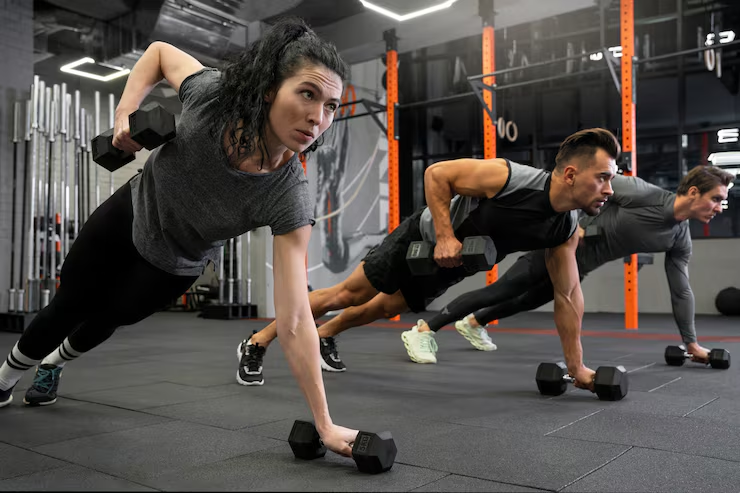
Gym workouts for beginners refer to structured exercise routines designed specifically for individuals who are new to fitness training or returning after a long break. These workouts are tailored to accommodate a beginner’s fitness level, focusing on building a solid foundation of strength, flexibility, endurance, and overall body conditioning. They are carefully planned to prevent injuries while promoting gradual improvement in fitness levels.
Beginners need workouts that are simple, manageable, and effective. The exercises included in these routines typically target major muscle groups, including legs, chest, back, and core, with a combination of cardio and resistance training. Cardio exercises, such as treadmill walking or cycling, help improve heart health and burn calories efficiently, while strength training builds lean muscle, boosts metabolism, and enhances body tone. A balanced approach ensures that beginners achieve overall fitness without overexerting themselves.
Another key aspect of gym workouts for beginners is progressive overload, which involves gradually increasing the intensity, weight, or duration of exercises over time. This principle is critical for continued improvement, as it challenges the body without causing burnout or injury. Beginners also benefit from structured routines that emphasize proper form and technique, as learning the correct movements early on sets the stage for long-term success. By following beginner-friendly workouts, individuals can gain confidence, stay motivated, and develop a lifelong habit of fitness. ✅
Why Gym Workouts for Beginners Are Essential
Embarking on gym workouts for beginners is crucial for establishing a strong foundation in fitness. Starting with beginner-friendly routines ensures that you develop essential strength, flexibility, and endurance before attempting more advanced exercises. Many beginners make the mistake of jumping into intense workouts, leading to injuries, frustration, or demotivation. A structured beginner routine prevents such setbacks, ensuring a safer and more enjoyable fitness journey.
Additionally, gym workouts for beginners focus on building core stability and proper posture. Exercises targeting the core, lower back, and stabilizing muscles improve balance, reduce the risk of injury, and enhance performance in daily activities. Beginners who neglect these fundamentals often struggle with more advanced exercises later. By incorporating a variety of movements such as squats, push-ups, planks, and light resistance training, beginners can develop functional strength and confidence in their abilities.
Finally, beginning with beginner-friendly workouts sets the stage for long-term lifestyle changes. These routines emphasize consistency, habit-building, and gradual progression, which are critical for sustainable fitness. Beginners not only experience physical transformation but also improved mental well-being, increased energy levels, and better sleep patterns. The sense of achievement from completing workouts successfully motivates individuals to stay committed, making gym workouts for beginners an essential starting point for anyone looking to transform their body and health. 🌟
Top Gym Workouts for Beginners
Treadmill Walking or Light Jogging 🏃♂️
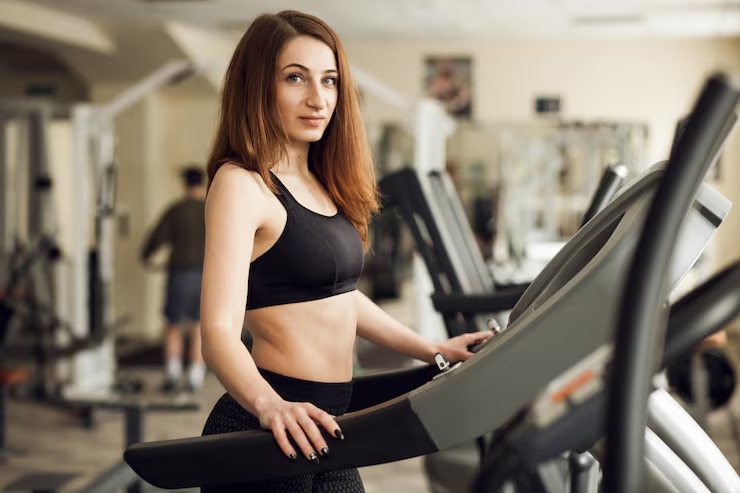
Treadmill walking or light jogging is one of the most beginner-friendly exercises, perfect for individuals starting their fitness journey. As part of gym workouts for beginners, it provides low-impact cardio that strengthens the heart and lungs while burning calories efficiently. Walking on a treadmill helps improve circulation, enhance stamina, and prepare your body for more intense workouts in the future. Beginners should begin at a comfortable pace, focusing on proper posture—keeping the back straight, shoulders relaxed, and engaging the core. Light jogging can be gradually incorporated as endurance improves, creating a sustainable cardio routine without overwhelming the body.
A major advantage of treadmill workouts in gym workouts for beginners is the ability to control speed, incline, and duration. Beginners can start with 10–15 minutes of walking at a moderate pace and progressively increase the time or incline for better calorie burn. Interval walking—alternating between brisk walking and light jogging—can increase cardiovascular efficiency and fat-burning potential. Additionally, treadmill sessions can be paired with music or podcasts to make the workout more engaging, reducing mental fatigue and promoting consistency. These workouts also help improve mood and energy levels due to endorphin release, which is crucial for sustaining motivation among beginners.
For optimal results, treadmill walking or jogging should be combined with a warm-up and cooldown. Warm-up exercises like leg swings, arm rotations, and light stretches prepare muscles and joints for movement, while cooldown helps prevent soreness and enhances recovery. Integrating treadmill workouts into gym workouts for beginners at least 3–4 times a week ensures steady progress in cardiovascular health, endurance, and weight management. Beginners can track distance, pace, and duration to monitor progress, celebrate milestones, and stay motivated. Treadmill workouts are simple yet powerful exercises that lay a solid foundation for a lifelong fitness habit. ✅
Bodyweight Squats 🏋️♀️
Bodyweight squats are a fundamental lower-body exercise and a staple in gym workouts for beginners. They target multiple major muscle groups, including quadriceps, hamstrings, glutes, and core muscles, providing overall lower-body strength and stability. Squats also enhance flexibility in the hips and knees while improving balance and coordination. For beginners, the focus should be on mastering proper form before adding resistance: feet shoulder-width apart, back straight, chest up, and knees aligned with toes. Practicing bodyweight squats daily can create a strong foundation for more advanced lower-body exercises in the future.
Incorporating bodyweight squats in gym workouts for beginners also benefits posture and functional fitness. Squats mimic everyday movements such as sitting and standing, which strengthens muscles used in daily life and reduces the risk of injury. Variations like goblet squats or sumo squats can be gradually added to target different muscle groups and increase intensity. Beginners should start with 2–3 sets of 10–15 repetitions and progressively increase repetitions or hold a light dumbbell as confidence and strength improve. This gradual approach prevents overexertion while ensuring maximum muscle engagement.
Additionally, squats play a crucial role in metabolism and fat-burning. Lean muscle built through squats helps burn calories even at rest, which is especially important for beginners aiming for weight loss. Combining squats with complementary exercises such as lunges, step-ups, and planks as part of gym workouts for beginners ensures a full-body workout that maximizes results. Consistency and gradual progression are key, allowing beginners to achieve stronger legs, a toned gluteal region, and enhanced functional mobility. Squats are not just a workout; they are a gateway to building confidence and body control. 🌟
Push-Ups 💪
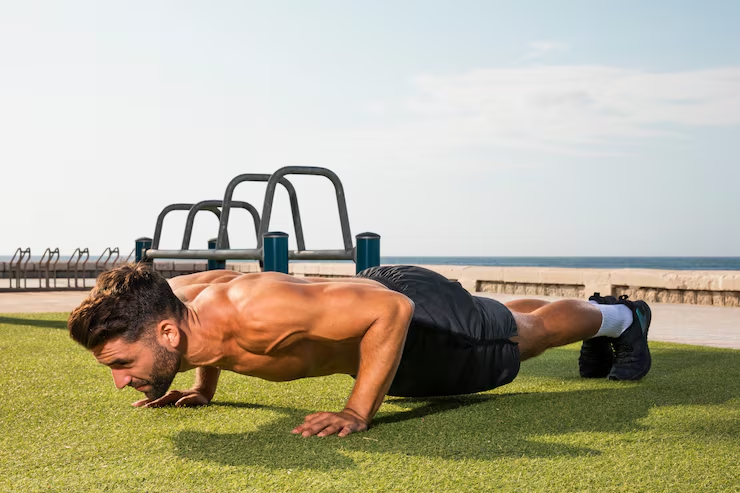
Push-ups are an essential upper-body exercise in gym workouts for beginners, effectively targeting the chest, shoulders, triceps, and core muscles. They are versatile, require no equipment, and can be modified to suit any fitness level. Beginners should start with knee push-ups or incline push-ups on a bench to build strength without straining joints. Maintaining proper form—straight back, engaged core, and controlled movement—is crucial to prevent injury. Push-ups enhance upper-body strength, muscular endurance, and core stability, laying the groundwork for more advanced movements like bench presses and planks.
One of the biggest benefits of push-ups in gym workouts for beginners is functional strength development. Push-ups simulate everyday pushing movements and improve overall body coordination. Gradually increasing repetitions and sets, or moving from modified to standard push-ups, strengthens muscles efficiently. Beginners can also experiment with variations such as diamond push-ups or shoulder taps to challenge different muscle groups. Proper breathing during push-ups—inhale while lowering and exhale while pushing up—ensures optimal oxygen flow and better performance.
Incorporating push-ups into a beginner routine also supports posture correction. Strong chest, shoulder, and back muscles prevent slouching and improve alignment, reducing back pain and enhancing movement efficiency. Push-ups complement other exercises like squats, lunges, and planks in gym workouts for beginners, creating a balanced workout that develops both upper and lower body strength. Practicing push-ups consistently builds endurance, confidence, and resilience, making them a cornerstone exercise for anyone starting their fitness journey. ✅
Plank Variations 🧘♂️
Planks are a powerful core exercise and a vital part of gym workouts for beginners. They engage multiple muscle groups simultaneously, including the abs, lower back, shoulders, and glutes. A strong core improves posture, balance, and stability, which is crucial for performing other exercises safely. Beginners should start with a basic forearm plank, holding the position for 20–30 seconds, gradually increasing the duration as strength improves. Correct alignment—shoulders over elbows, back straight, and core engaged—is key to preventing strain and achieving maximum benefits.
Different plank variations enhance core strength and prevent workout monotony in gym workouts for beginners. Side planks, plank with shoulder taps, and plank leg lifts challenge different core muscles while improving balance. Beginners can incorporate 2–3 sets of 20–40 seconds per variation to gradually build endurance. These exercises not only strengthen the midsection but also promote muscular coordination and joint stability, which are essential for functional fitness. Proper form and controlled breathing ensure effective activation of core muscles without unnecessary strain.
Planks also support injury prevention and overall athletic performance. A strong core stabilizes the spine, reducing the risk of back injuries and improving performance in exercises such as squats, deadlifts, and push-ups. Integrating planks into gym workouts for beginners boosts muscular endurance, enhances body control, and promotes overall strength. Over time, beginners notice improved posture, reduced lower back discomfort, and better coordination. Consistent plank practice forms a strong foundation for all future workouts, making it an indispensable element of any beginner’s routine. 🌟
Dumbbell Rows 🏋️♂️
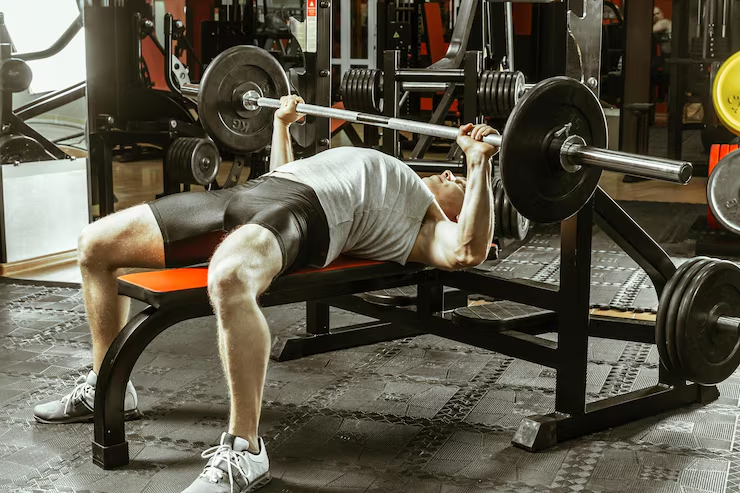
Dumbbell rows are a highly effective exercise for building upper-back strength, making them a crucial part of gym workouts for beginners. They target the latissimus dorsi, rhomboids, rear deltoids, and biceps, promoting balanced upper-body development. Beginners should start with light dumbbells, focusing on proper form—keeping the back straight, core engaged, and elbows tucked close to the body. Controlled, slow movements ensure maximum muscle engagement and reduce the risk of injury. Incorporating dumbbell rows strengthens posture, improves pulling strength, and enhances overall upper-body functionality.
In gym workouts for beginners, dumbbell rows also aid in preventing common postural problems caused by prolonged sitting or desk jobs. Strengthening the back muscles helps maintain upright posture and reduces shoulder and neck strain. Beginners can perform 2–3 sets of 12–15 repetitions per arm, gradually increasing weight as strength improves. Variations like single-arm rows, bent-over rows, and reverse flys diversify the routine and target additional muscle groups, ensuring comprehensive upper-body development.
Dumbbell rows complement other exercises such as push-ups and planks in gym workouts for beginners to create a balanced strength routine. They enhance grip strength, shoulder stability, and overall endurance, which are essential for more advanced exercises in the future. Consistent practice leads to visible improvements in muscle tone, posture, and strength, making dumbbell rows a highly effective and beginner-friendly exercise. ✅
Lunges 🦵
Lunges are a versatile lower-body exercise, ideal for inclusion in gym workouts for beginners. They target the quadriceps, hamstrings, glutes, and calves, while also engaging the core for stability. Beginners should focus on proper alignment—keeping the front knee behind the toes and maintaining a straight torso—to prevent knee strain. Starting with bodyweight lunges allows for mastery of form before progressing to weighted variations. Lunges not only build strength but also improve balance, coordination, and mobility.
Incorporating lunges into gym workouts for beginners offers functional benefits, as they mimic natural movements like walking, climbing, and stepping. Forward, reverse, and side lunges work different muscle groups and prevent monotony, making workouts more dynamic and effective. Beginners can perform 2–3 sets of 10–12 repetitions per leg, gradually increasing repetitions or adding dumbbells as strength improves. Lunges also enhance flexibility in the hip flexors and reduce injury risks during more complex movements.
Lunges are excellent for weight management and lean muscle development. The muscles activated during lunges increase calorie burn and metabolic rate, which is beneficial for beginners aiming for fat loss. Combining lunges with squats, planks, and dumbbell rows as part of gym workouts for beginners ensures full-body strength and functional fitness. Over time, lunges improve posture, leg strength, and overall athletic performance, establishing a solid foundation for advanced exercises. 🌟
Resistance Band Exercises 🎀
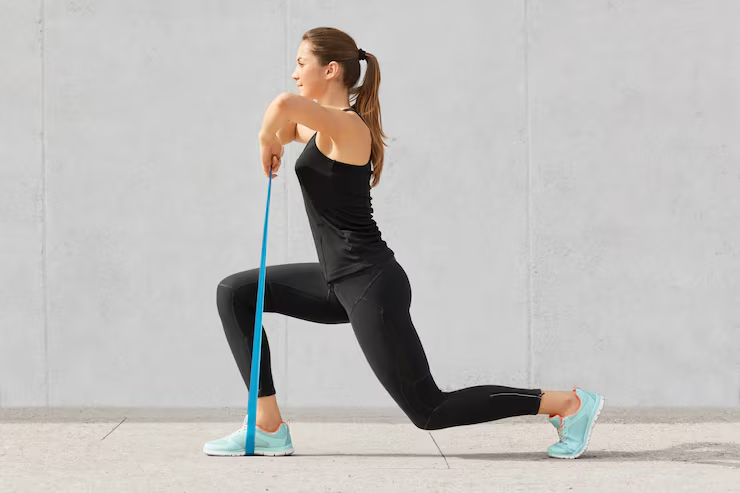
Resistance bands are perfect for beginners because they provide low-impact, versatile resistance training. Gym workouts for beginners often incorporate bands to target multiple muscle groups safely and effectively. Exercises such as banded rows, chest presses, lateral walks, and glute bridges can strengthen the upper body, lower body, and core. Resistance bands allow beginners to control tension, perform smooth movements, and build strength without heavy equipment. They are also portable, making them convenient for home workouts or travel.
One of the key advantages of resistance bands in gym workouts for beginners is their adaptability. Beginners can adjust band tension to suit their fitness level, gradually increasing resistance to ensure continuous progress. Resistance band exercises improve muscle endurance, coordination, and flexibility. These exercises also reduce joint strain, which is especially important for those new to strength training or recovering from injuries. Bands can be incorporated in warm-ups, main workouts, or even as standalone exercises.
Resistance band training complements other beginner exercises like squats, lunges, and planks by adding resistance and challenging stabilizing muscles. Integrating bands into gym workouts for beginners ensures a full-body strength routine while reducing the risk of injury. Beginners can perform 2–3 sets of 12–15 repetitions per exercise, focusing on controlled movements. Over time, resistance band exercises improve muscle tone, balance, and overall fitness, making them an essential tool for anyone starting their fitness journey. ✅
Conclusion
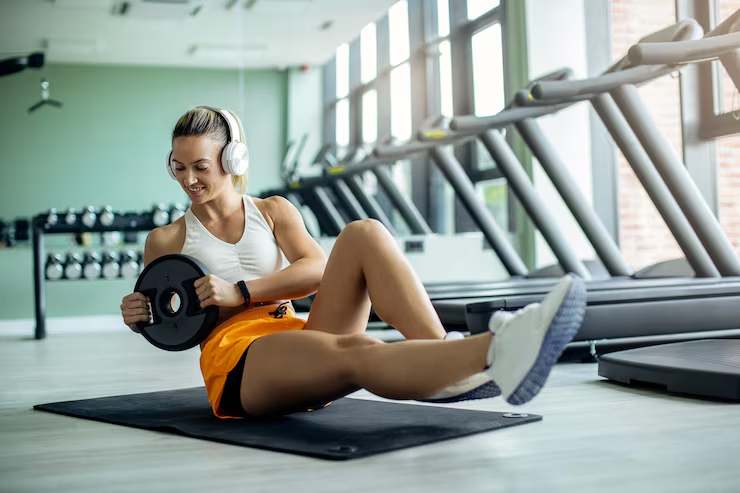
Starting a fitness journey can be intimidating, but gym workouts for beginners provide a structured, safe, and effective way to build strength, endurance, and confidence. By focusing on simple, manageable exercises, beginners can learn proper form, avoid injuries, and create sustainable fitness habits. From treadmill walking to resistance band exercises, each component of a beginner workout routine serves a specific purpose in developing overall health and well-being. 🌟
Consistency is the key to success. Performing these workouts regularly, with gradual intensity progression, ensures long-term benefits. Beginners experience not only physical transformations such as fat loss, muscle gain, and improved stamina, but also mental benefits including reduced stress, enhanced focus, and a positive mindset. A strong start with beginner-friendly routines lays the foundation for advanced training in the future.
Ultimately, committing to gym workouts for beginners empowers individuals to take control of their health and lifestyle. By understanding the “what” and “why” of each exercise, beginners can enjoy a structured, engaging, and rewarding fitness journey. Whether your goal is weight loss, muscle toning, or overall health improvement, these workouts provide the roadmap to achieve your objectives safely and effectively. Start today, stay consistent, and watch your fitness goals become a reality! 💪
FAQs
Q1: How often should beginners do gym workouts to see results?
Beginners should aim for 3–5 gym sessions per week, focusing on a mix of cardio, strength training, and flexibility exercises. Consistency is key, and gradual progression helps avoid injuries. Even 30–45 minutes per session can lead to visible improvements in fitness, endurance, and overall health over time.
Q2: Are gym workouts for beginners suitable for weight loss?
Yes! Structured gym workouts for beginners combine cardio and strength training to burn calories and boost metabolism. Strength exercises help build lean muscle, increasing calorie burn even at rest. Combined with a balanced diet, beginner workouts are highly effective for weight loss and improving overall body composition.
Q3: Can beginners build muscle without heavy weights?
Absolutely! Beginners can gain muscle using bodyweight exercises, resistance bands, and light dumbbells. Focusing on proper form, controlled movements, and progressive overload ensures muscle growth safely. Over time, as strength improves, beginners can gradually increase weights to continue building muscle effectively.
Q4: How long does it take to see results with beginner workouts?
Visible results vary, but most beginners notice improved strength, endurance, and energy levels within 4–6 weeks of consistent training. Physical changes, like muscle tone and fat reduction, typically become more apparent after 8–12 weeks. Consistency, proper nutrition, and adequate rest accelerate progress.
Q5: Is it necessary to do cardio and strength training together as a beginner?
Yes! Combining cardio and strength training ensures balanced fitness. Cardio improves heart health and burns calories, while strength training builds lean muscle and enhances metabolism. A well-rounded gym workouts for beginners routine that includes both types of exercises delivers optimal results for health, weight loss, and overall fitness.